Why Do Shaded Sidewalks in St. Augustine Stain Before the Rest of the Concrete?
Key Takeaways
- Shaded sidewalks stay wet longer after rain, which lets algae and mildew grow faster than on sunny sections.
- Joints and areas near sprinklers collect grime quicker than the rest of the slab.
- This kind of staining is common in St. Augustine's climate and doesn't mean your concrete is damaged underneath.
- We match the pressure to your surface so the stains come off without etching the concrete.
- A clean sidewalk and driveway make the whole property look cared for.
| Table of Contents |
|---|
| Causes of Staining |
| Why Some Spots Stain Faster |
| Concrete Damage Concerns |
| Our Cleaning Process |
| Prevention Tips |
We've walked up to plenty of driveways where the homeowner points out one stretch of sidewalk that looks darker than the rest, even though everything around it looks fine. It's a fair thing to wonder about, and most of the time it has nothing to do with how clean someone keeps their yard. There's a specific reason certain spots stain first, tied to how long that section of concrete stays wet after it rains, and it's one we can usually fix without putting the surface at risk.
What Causes the Staining on Shaded Sidewalks?
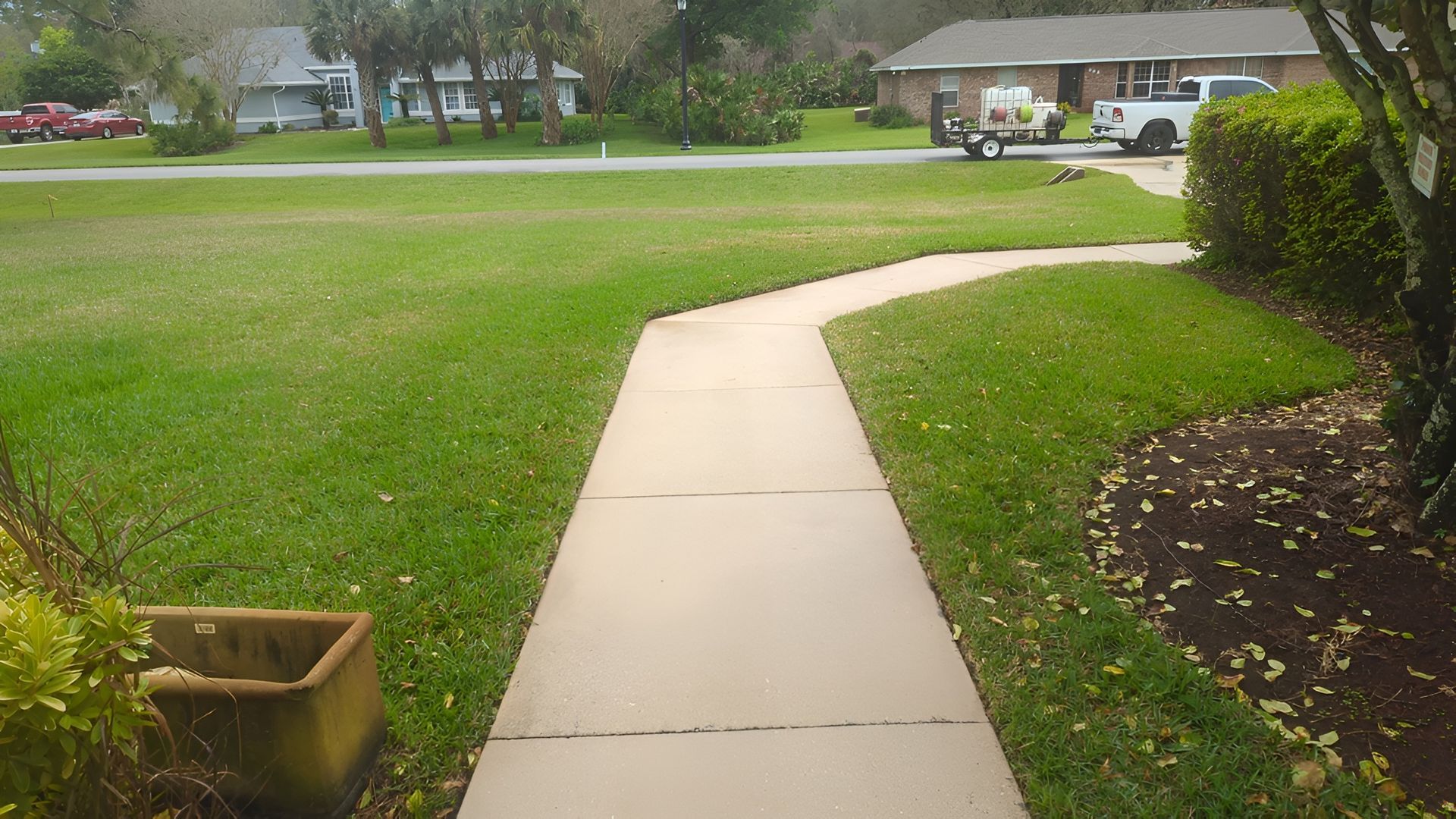
What's actually causing it is algae and mildew, and both need two things to grow: shade and moisture. Sunlight dries concrete out between rains and keeps that kind of growth from taking hold. Shaded spots don't get that same break, so the moisture sits there longer, and that's exactly the kind of environment algae likes.
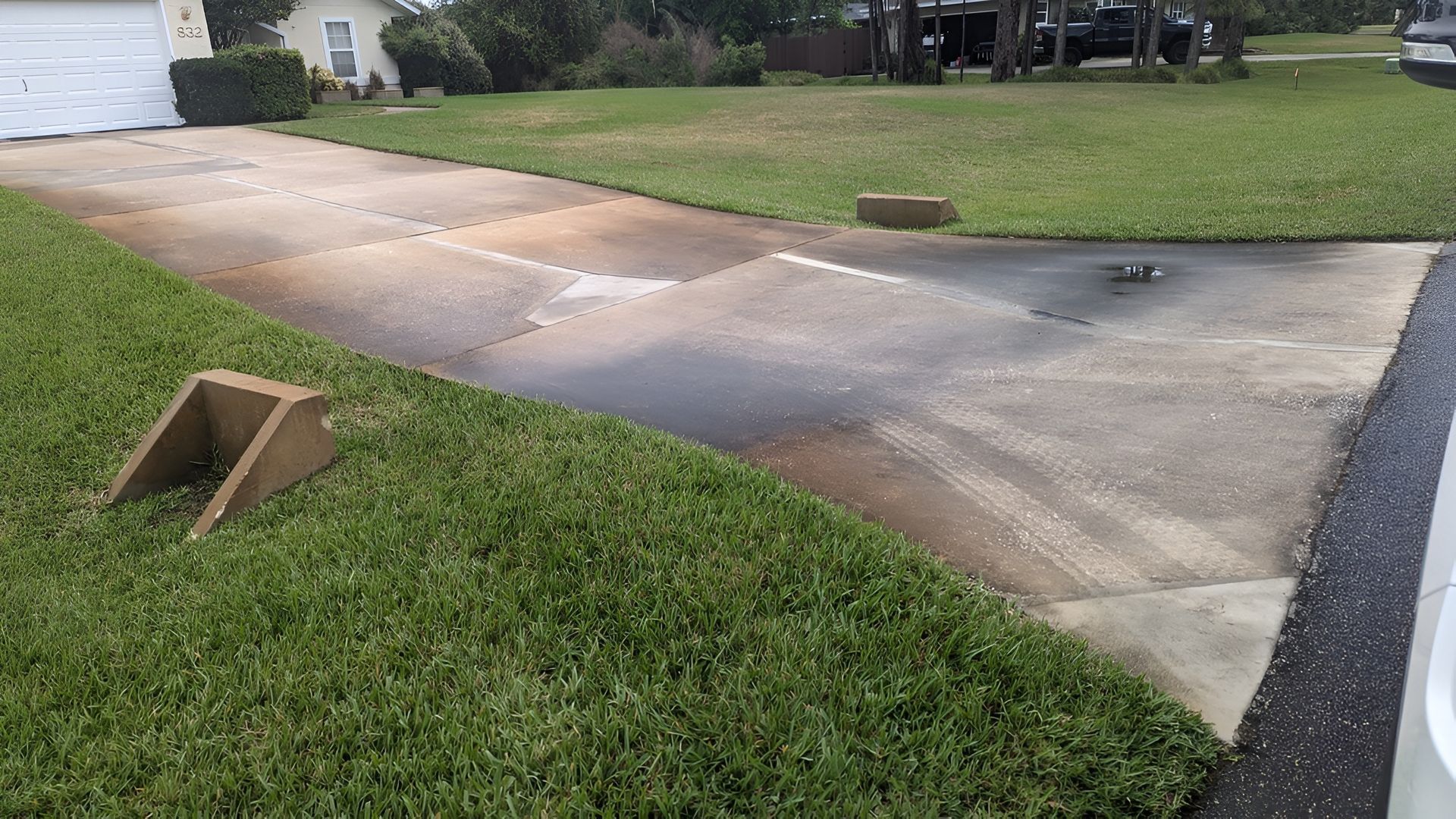
This is why you'll often see one stretch of sidewalk near a tree or along a fence line looking noticeably darker than a section just a few feet away that gets more sun. It's not a different type of concrete and it's not a sign you missed something. One part dries out fast, and the other one doesn't, and that difference compounds every time it rains.
Why Do Joints and Sprinkler Areas Stain Faster?
Two other things speed this up: joints and sprinklers. The narrow gaps between concrete slabs trap water and debris, and because they're harder to dry out, they tend to darken before the rest of the slab does. If you've ever noticed a dark line running along a seam in your driveway, that's what's happening.
Sprinklers work on a schedule, and that's part of what makes them different from rainfall. If a sprinkler head hits the same section of sidewalk every time it runs, that spot is getting wet far more often than the rest of your property. Over weeks and months, that repeated watering builds a visible stain that follows the exact shape of the spray, something we see often on properties near St. Augustine Beach where irrigation runs more frequently in the dry months.
Is This Staining a Sign of Damage to My Concrete?
No, and this is something we tell homeowners often because it's an easy thing to worry about. This kind of staining sits on the surface and is common across St. Augustine properties given the humidity and rainfall here, so it doesn't mean your concrete is cracking, weakening, or wearing out underneath. It's a buildup problem, not a structural one, and it responds well to cleaning, especially if it hasn't been sitting there for years untouched.
The humidity and regular rain we get make this almost impossible to avoid completely, even on well-kept properties. If your sidewalk looks like this, it's not a reflection of how well you take care of your home. It's just what happens in this climate over time, especially on older concrete in shaded yards around St. Augustine where mature trees have grown in over the years.
How Do We Clean It Without Damaging the Surface?
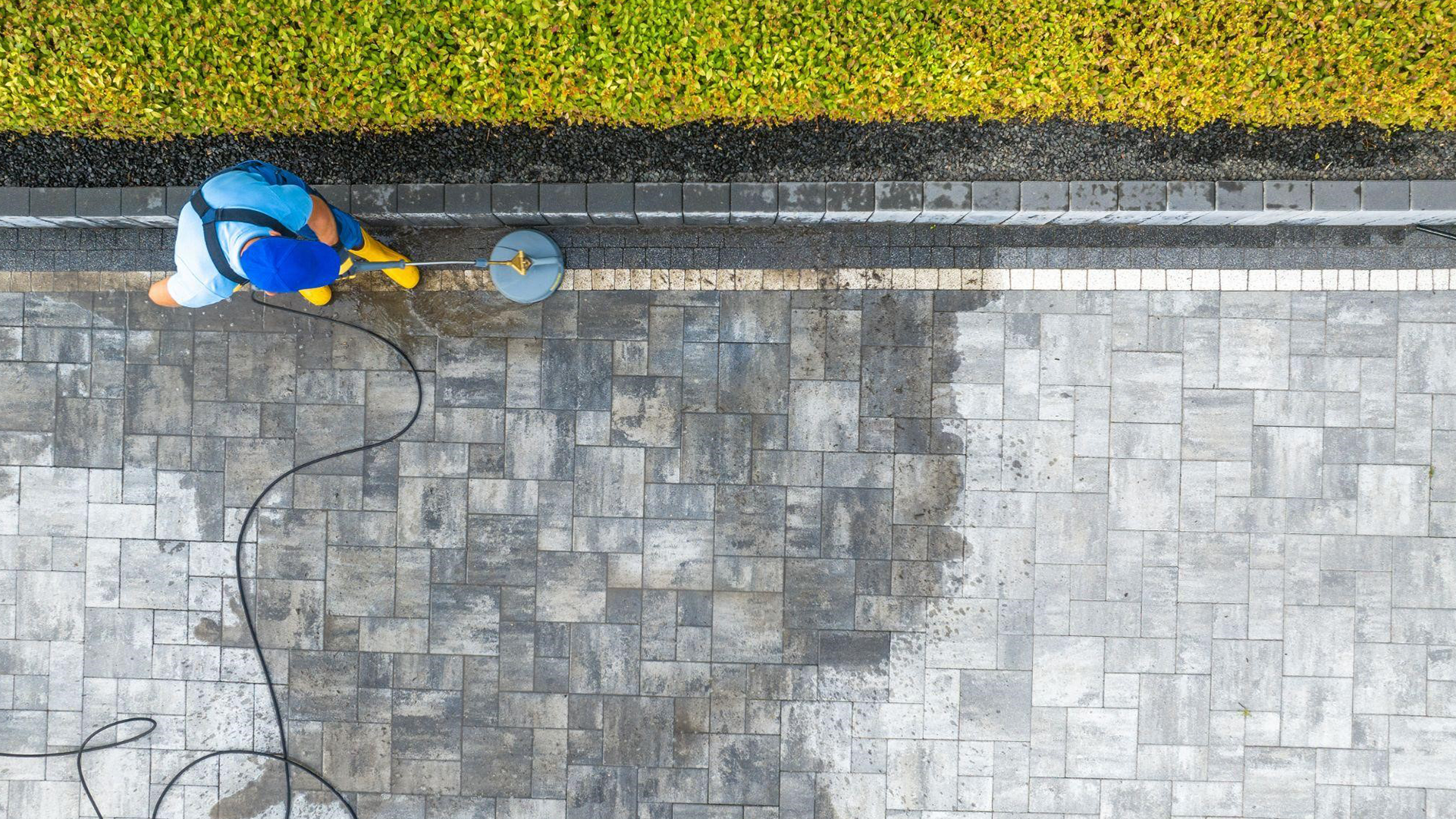
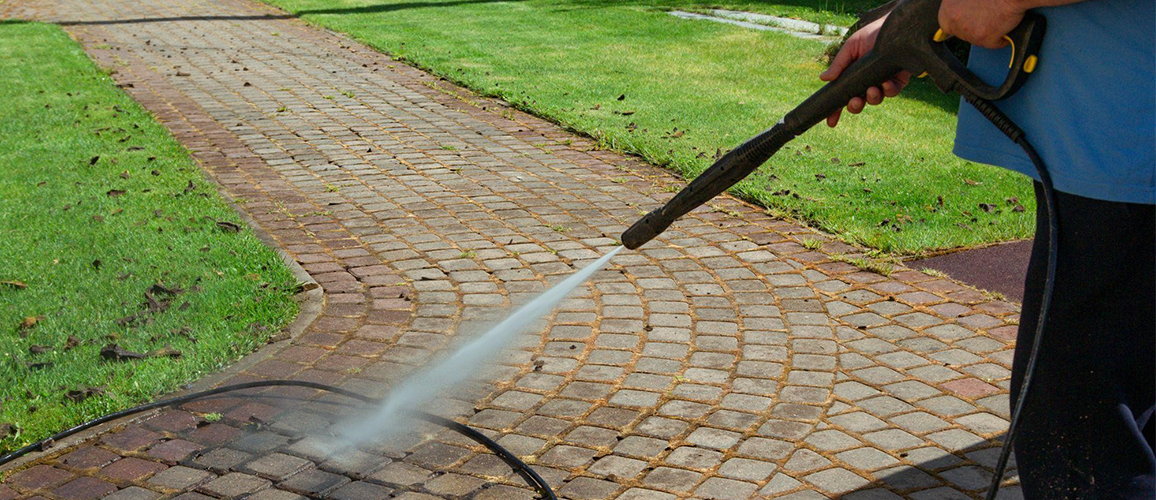
This is where the actual cleaning matters more than people expect. We don't run the same pressure on every surface, because concrete that's hit too hard can end up etched or streaked, and that kind of damage is often more noticeable than the stain it was supposed to remove. Our pressure washing service targets these problem areas precisely, and we adjust water pressure and cleaning methods so the buildup comes off without harming the concrete or leaving streaks.
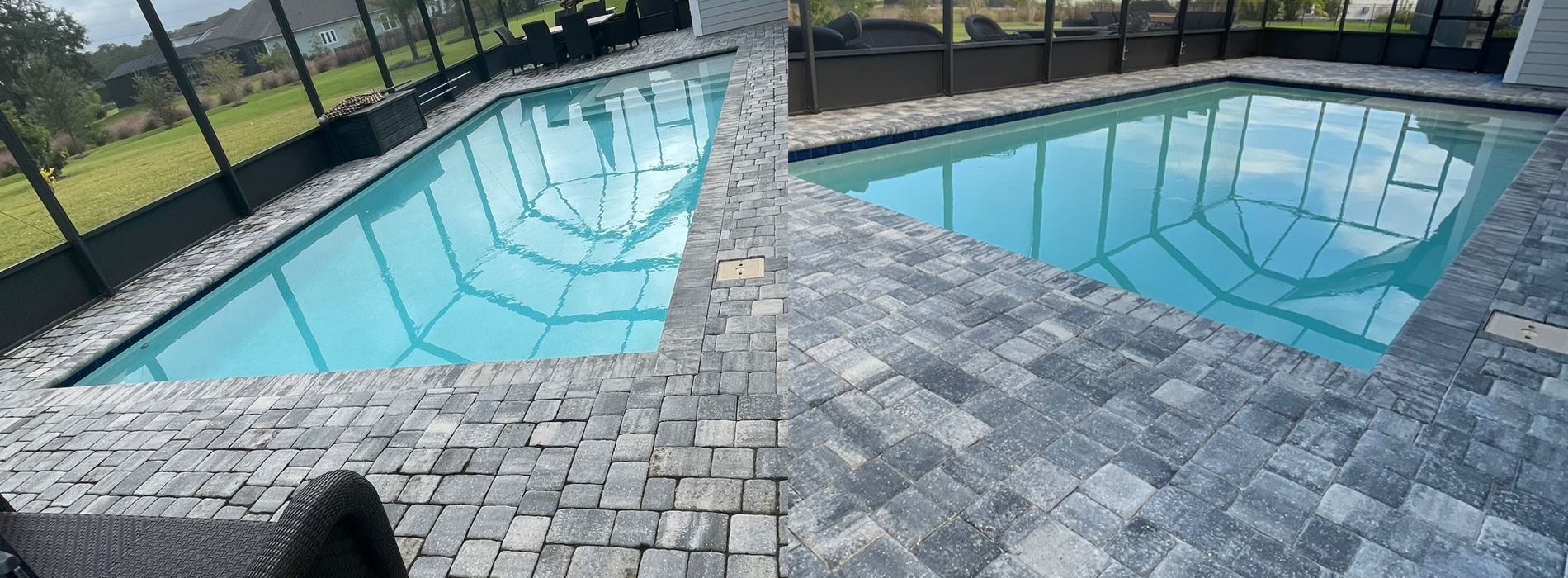
We provide this same careful approach across driveways, sidewalks, patios, and entry pads, so the whole front of your property comes out looking even instead of patchy. If your property also has pavers around a patio or pool deck, we provide
paver sealing too, which helps protect those surfaces from the same kind of staining going forward. And if you run a business with a sidewalk or entryway that sees regular foot traffic, we provide
commercial exterior cleaning built to keep those areas looking sharp without getting in the way of your customers.
What Can You Do to Slow It Down Between Cleanings?
A few small changes can buy you time between cleanings. Trimming back tree branches that shade your sidewalk lets more sun reach the concrete. Adjusting your sprinkler heads so they're not soaking the same stretch every day cuts down on one of the biggest causes of repeat staining.
Rinsing shaded areas with a garden hose every so often can help slow buildup, though it won't replace a full cleaning once the staining has set in. None of this stops the problem completely, especially in yards with heavy tree cover, but it can stretch out how long your sidewalk stays looking clean between visits from us.
Frequently Asked Questions
Why does my sidewalk stain faster than my neighbor's, even though we're on the same street?
It usually comes down to differences in tree cover and sprinkler placement. A yard with more shade or a sprinkler zone that runs daily will show staining sooner than a property with more open sun and less frequent watering, even on the same block.
Will pressure washing damage older concrete or older sidewalks?
Not when it's done right. We adjust pressure levels and technique based on the surface and its condition, which is part of how we avoid etching or streaking on any driveway, walkway, or sidewalk, regardless of age.
How often should I get my sidewalk cleaned if I live near St. Augustine Beach or the coast?
Coastal humidity and salt air can speed up buildup a little compared to inland properties, so homes closer to the water sometimes benefit from cleaning slightly more often. It's not a dramatic difference, but it's worth factoring into your schedule.
If I get my sidewalk cleaned now, how long before the staining shows up again?
It varies by property. Areas with heavy shade or daily sprinkler exposure tend to show signs of staining again sooner than sections that get more sun and less regular watering. We can give you a better sense of what to expect for your specific property during an estimate.
Besides sidewalks, what other parts of my property can you clean in the same visit?
We typically handle driveways, patios, and entry pads alongside the sidewalk in one visit, so the whole front of the property comes out even. If you've got pavers, siding, or a roof that also needs attention, we can talk through those during the same estimate.
Let's Take a Look at Your Sidewalk
If those dark patches have been bothering you, we're happy to come take a look and tell you honestly what's going on, no pressure either way. Give us a call at
904-792-7777 whenever it's convenient, or
reach out to us and send a message if that's easier. Either way works, and we'll get back to you to figure out a time that fits your schedule.