Driveway Pressure Washing in St. Augustine, FL: What Builds Up Fast in Florida Humidity
Key Takeaways
- Florida humidity causes algae and mildew to spread quickly across concrete surfaces.
- Irrigation overspray leaves mineral stains and dark streaks near driveway edges.
- Shaded driveways near trees usually collect buildup faster than open concrete.
- Regular pressure washing helps prevent slippery surfaces and deep staining.
- Surface cleaners remove grime more evenly than standard pressure washing wands.
A driveway can look clean one month and completely different after a few weeks of summer rain. Between humidity, irrigation systems, oak tree shade, and coastal moisture, concrete around St. Augustine, FL collects buildup fast. Most homeowners first notice the problem when dark patches start forming near expansion joints or when the surface stays damp longer than usual after rain.
What Causes Driveways to Turn Dark So Quickly in St. Augustine, FL?
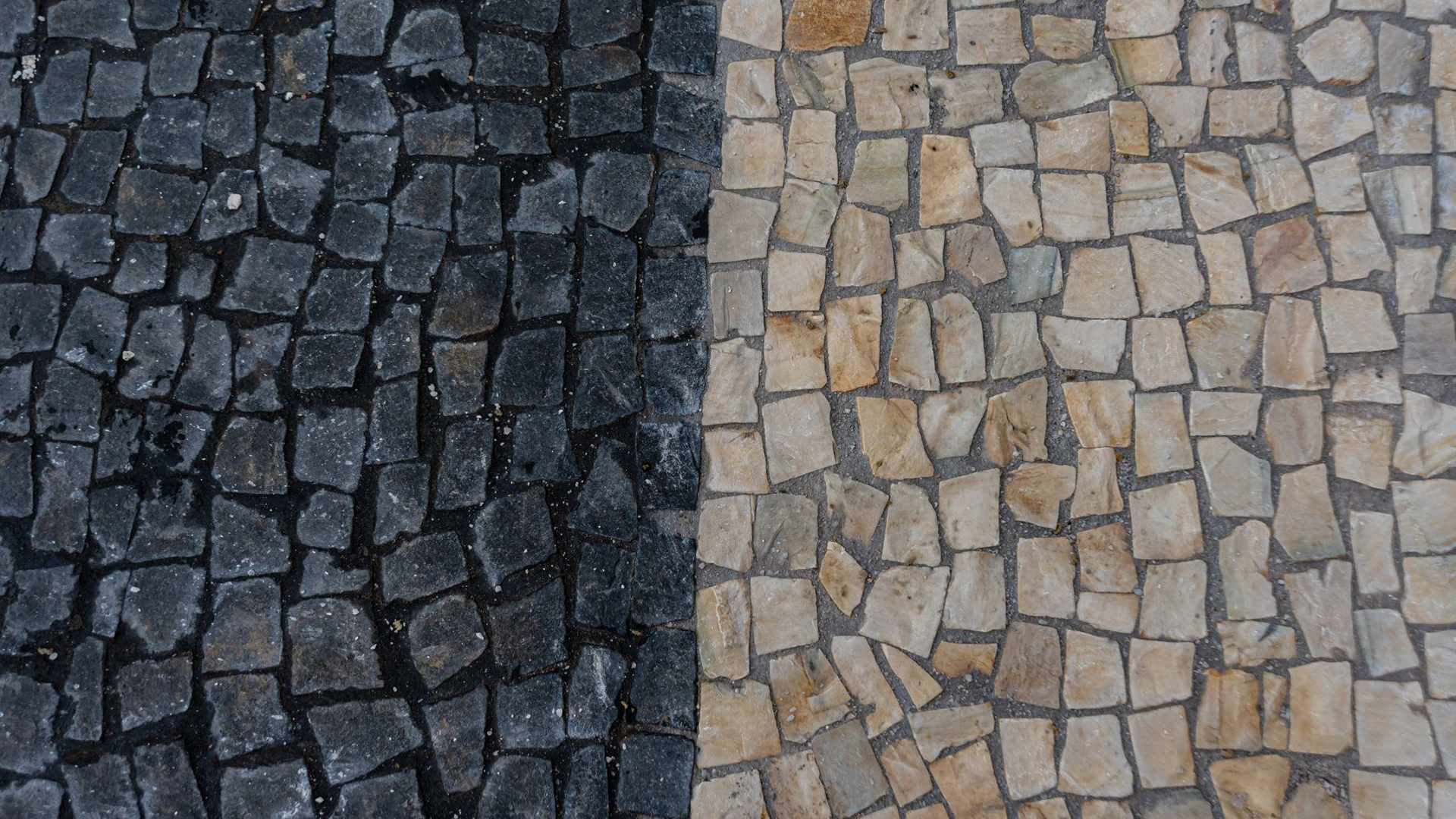
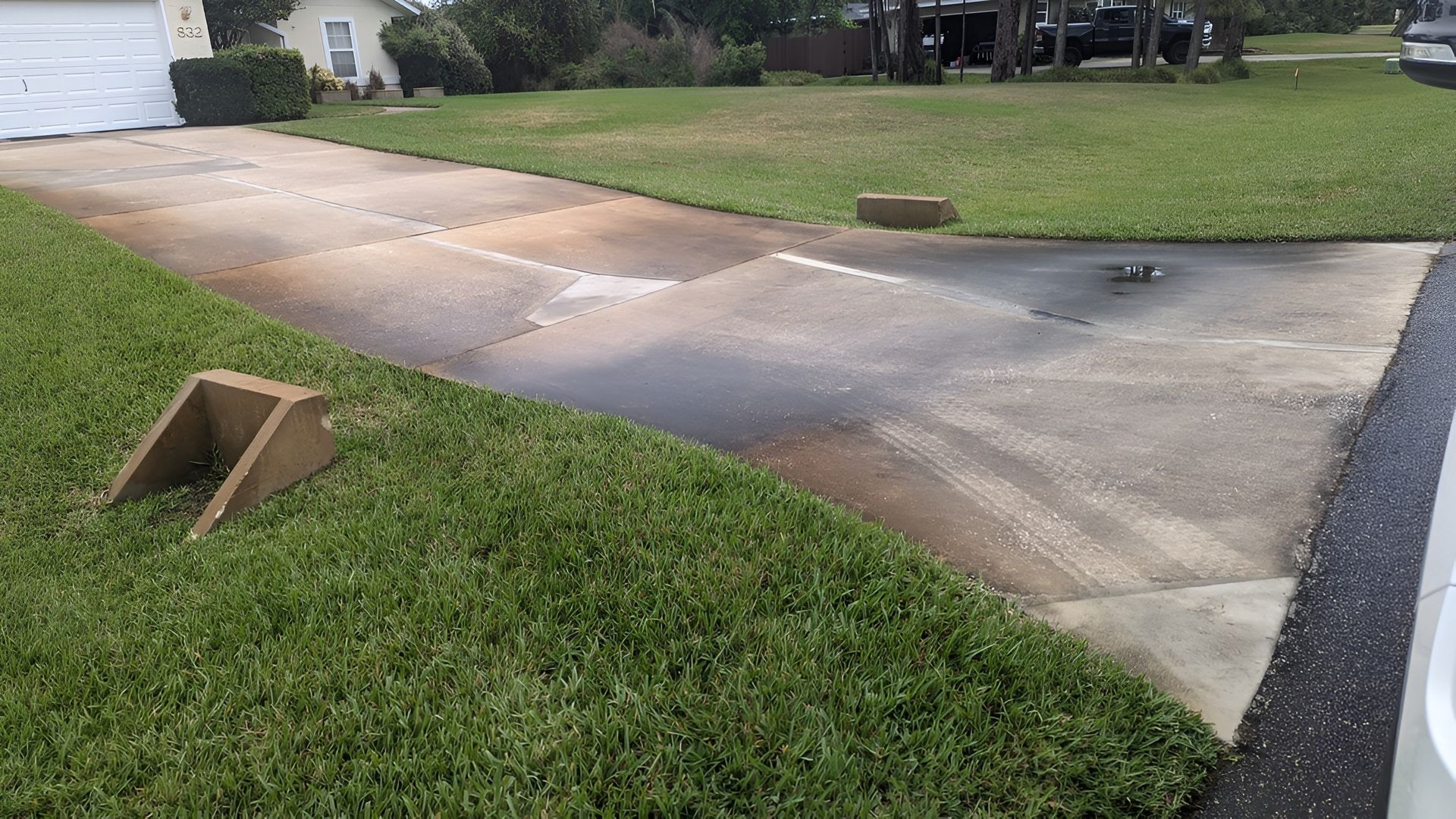
Concrete naturally holds moisture, especially during Florida’s humid months. Once organic buildup starts forming, shaded areas usually darken first. North-facing driveways and sections near garage doors tend to stay damp longer, which gives algae and mildew the conditions they need to spread.
Homes near Anastasia Island, Vilano Beach, and the A1A corridor often deal with additional moisture from coastal air. Salt in the air combines with humidity and storm runoff, creating a layer of grime that sticks to concrete surfaces faster than many homeowners expect. Driveways under heavy tree cover also collect tannin stains from leaves and acorns throughout the year.
Irrigation systems create another common issue around St. Augustine, FL neighborhoods. Repeated overspray leaves mineral deposits along driveway edges and sidewalks, especially in areas with hard water. Over time, those lines become darker and harder to remove with standard garden hose rinsing.
Our
pressure washing service is designed around these local conditions. We clean concrete using surface-specific pressure levels so the driveway comes out evenly cleaned without leaving visible striping or etched marks.
Why Does Algae Spread Faster Near the Coast?
Humidity stays high across northeastern Florida for much of the year, but coastal neighborhoods often see buildup spread even faster. Moisture in the air settles onto concrete overnight, especially during warmer months when surfaces cool after sunset. That constant dampness gives algae and mildew a place to grow almost continuously.
Driveways in St. Augustine Beach and Butler Beach often develop green buildup sooner than inland neighborhoods because coastal air rarely stays dry for long. Even homes that look sunny during the day may keep moisture trapped in textured concrete overnight. Once algae begins forming, rainwater spreads spores across the rest of the driveway.
Storm season also plays a role. Summer rain pushes dirt, mulch, and organic debris across the concrete repeatedly. Expansion joints and low spots trap moisture after storms, creating darker streaks that slowly spread outward across the surface.
Many homeowners wait until the driveway looks heavily stained before scheduling cleaning, but earlier maintenance usually produces better results. Organic buildup becomes harder to remove once it settles deep into porous concrete for long periods.
What Stains Are Hardest to Remove from Concrete?
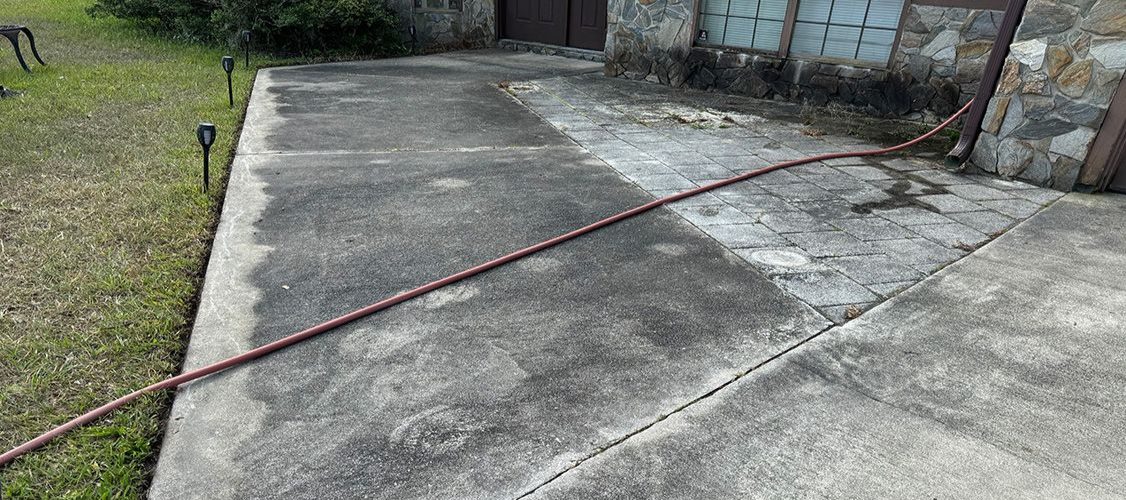
Not every driveway stain comes from algae. Rust stains from irrigation systems, fertilizer runoff, tire marks, oil spots, and red clay can all settle into concrete differently. Some stains remain near the surface, while others soak deeper into older concrete over time.
Oak trees around Lincolnville, World Golf Village, and older St. Augustine, FL neighborhoods commonly leave dark organic stains from leaves and tannins. Driveways near construction areas may also collect orange clay stains after rain pushes dirt across the surface. Those stains usually require pre-treatment before pressure washing begins.
Oil spots near garages and parking areas often need separate treatment because water pressure alone does not fully break down petroleum residue. The same applies to rust stains caused by irrigation spray hitting metal fixtures or well-water systems.
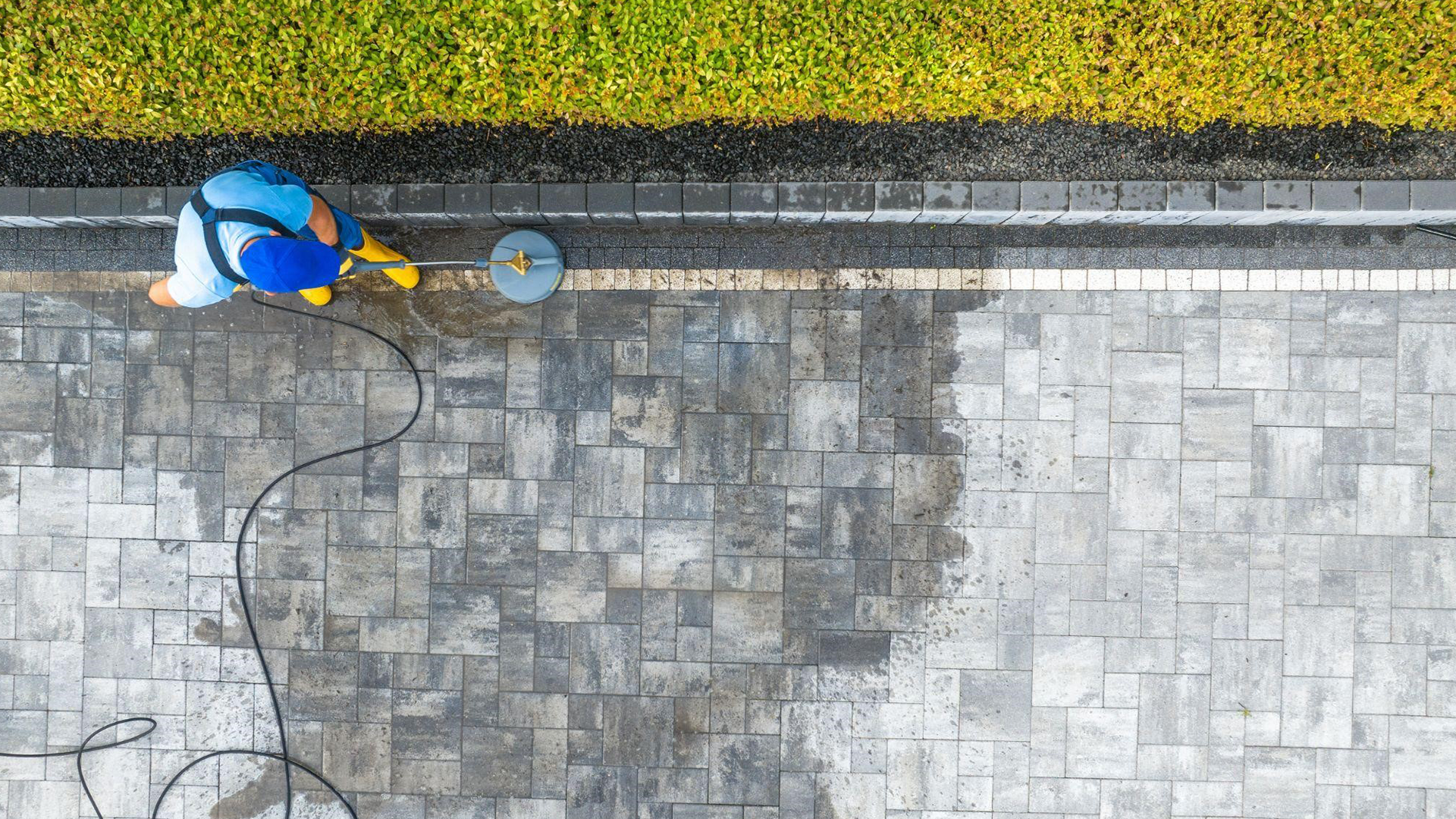
Using the wrong pressure on these surfaces can leave visible cleaning lines or damage weaker sections of concrete. That is why we use surface cleaner attachments designed specifically for flatwork instead of relying only on a standard spray wand. The cleaning stays more even across the driveway while reducing the chance of surface damage.
How Do We Clean Driveways Without Damaging the Surface?
Concrete cleaning should remove buildup without leaving the driveway looking rough afterward. Older driveways around the Historic District and coastal properties sometimes have weaker surface layers that need more controlled pressure levels during cleaning.
We typically start by inspecting areas with heavy organic buildup, irrigation staining, or oil spots. Certain sections may need pre-treatment before pressure washing begins. After that, we use commercial surface cleaner attachments that clean evenly across the concrete instead of leaving visible streak patterns.
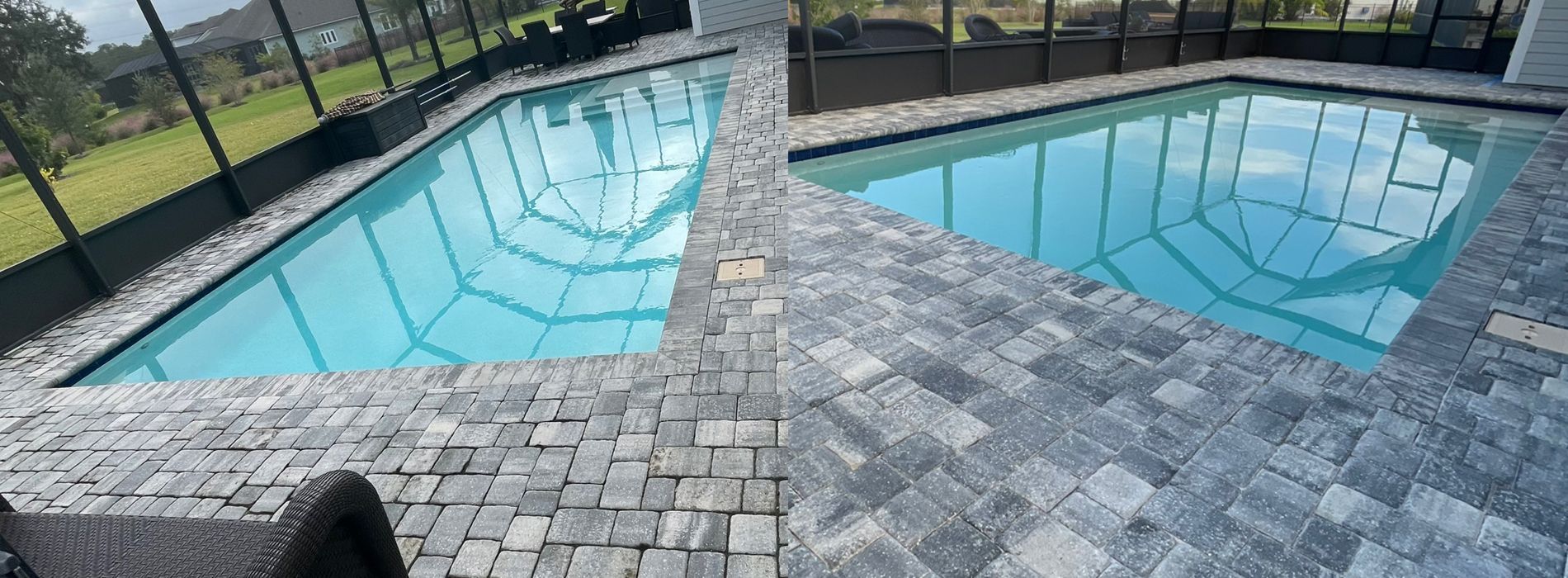
Driveways near pool areas or paver walkways often need extra care where surfaces meet. High pressure pointed directly at soft joints, decorative edges, or nearby pavers can create damage if the cleaning method is not adjusted properly.
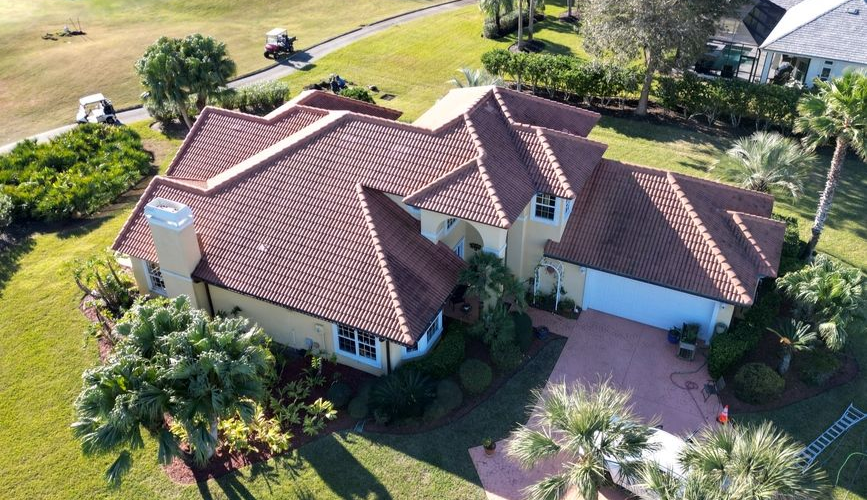
Many homeowners also combine driveway cleaning with roof soft washing or exterior surface cleaning so the whole property looks consistent afterward. Cleaning only one heavily stained surface can make the remaining buildup stand out even more once the driveway brightens up.
Which Areas Around St. Augustine, FL See the Fastest Buildup?
Neighborhood conditions make a big difference in how quickly driveways collect grime. Homes near the Intracoastal Waterway and coastal sections of St. Augustine, FL usually see moisture-related staining faster than inland areas. Salt air and regular storm activity keep surfaces damp for longer periods throughout the year.
Properties in Nocatee and newer HOA communities often deal with irrigation overspray staining because sprinkler systems run frequently to maintain landscaping. Older neighborhoods with mature oak trees usually see heavier organic staining from leaf debris and shade coverage.
Vacation rentals near St. Augustine Beach also tend to collect buildup faster because driveways receive heavier traffic and more sand movement from beach activity. Tire marks, sand residue, and moisture combine quickly during peak tourist seasons.
Regular cleaning helps prevent stains from settling deeper into the concrete over time. Once buildup stays in place long enough, the driveway may require more aggressive treatment to fully restore the appearance.
Frequently Asked Questions
How often should a driveway be pressure washed in St. Augustine, FL?
Most driveways in St. Augustine, FL benefit from cleaning about once a year. Homes near the coast, under heavy tree cover, or with frequent irrigation overspray may need service more often because buildup spreads faster in those conditions.
Can pressure washing remove black stains from concrete?
Yes, many black stains come from algae, mildew, or organic buildup that can be removed with proper surface cleaning methods. Some older stains may need additional treatment depending on how deep they have settled into the concrete.
Is pressure washing safe for older driveways?
Older concrete can still be cleaned safely when the pressure is adjusted correctly. Surface cleaners help reduce streaking and lower the risk of damage compared to using only a high-pressure spray wand.
Why does my driveway get slippery after rain?
Algae and mildew trap moisture on the surface, especially in shaded sections of the driveway. That buildup becomes slick after rain and usually spreads faster during humid weather.
Do homes near the beach need driveway cleaning more often?
In many cases, yes. Coastal moisture, salt air, sand, and humidity create conditions that allow buildup to spread faster than it does farther inland.
Ready to Clean Up Your Driveway?
Driveway stains usually do not improve on their own once algae and grime settle into the concrete. If your driveway is starting to darken, feel slippery after rain, or show heavy buildup near the edges, we can take a look and recommend the right cleaning approach for the surface. Call
904-792-7777 or
contact us today for a free driveway cleaning estimate in St. Augustine, FL.