Solar Panel Cleaning in St. Johns County, FL: What's Settling on the Glass and Why It Matters
Key Takeaways
- Pollen film, coastal salt haze, and storm-season residue are the three main things that dull solar panels in St. Johns County.
- Outside research from the National Renewable Energy Laboratory found rain alone often isn't enough to restore panel performance after pollen buildup.
- A thin film can be hard to spot from the ground, even when it's been building for months.
- We use a 3-stage water-fed pole system with purified water, a method that lines up with manufacturer-recommended cleaning practices.
- Cleaning frequency depends on tree cover, panel angle, and how close the property sits to the coast.
| Table of Contents |
|---|
| What's on the Glass |
| Why Rain Falls Short |
| Output Impact |
| Our Cleaning Method |
| Cleaning Frequency |
We've had homeowners call us up confused because their panels were installed less than two years ago and already look duller than they remember. It's not your imagination, and it's not a sign anything was installed wrong. Northeastern Florida puts a specific mix of things in the air that settle on glass over time, and most of it is too thin to notice unless you're looking for it. We see this often, and our solar panel cleaning service is built to bring that glass back to clear without putting the panels at risk.
What's Actually Settling on the Glass?
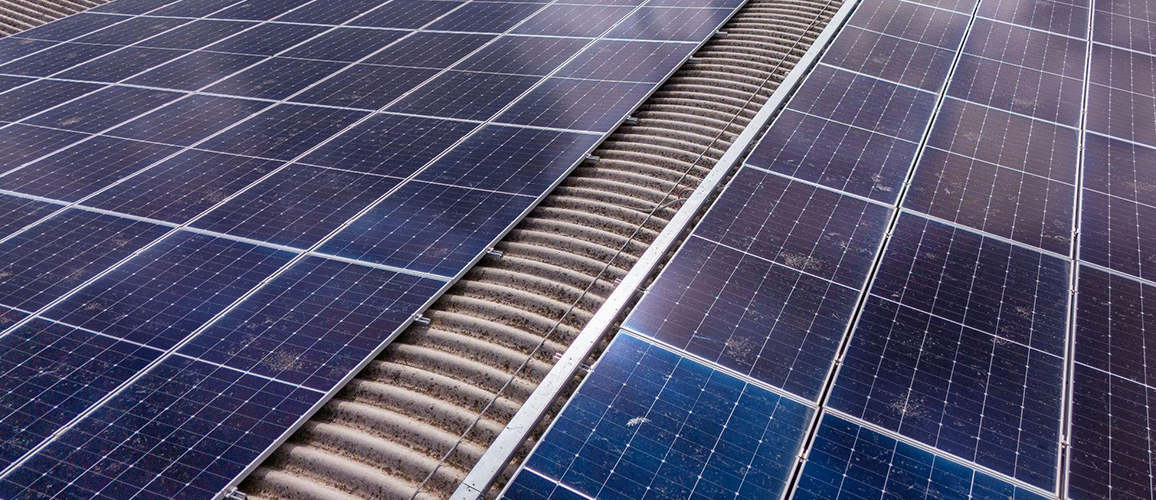
Three things tend to show up most on panels around here: pollen film, coastal salt haze, and storm-season residue. Pollen season in this part of Florida runs long, and pollen doesn't just land on cars and patio furniture, it settles on panel glass in a layer that's often invisible from the ground until it's been sitting for weeks.
Salt haze is the second piece, and it doesn't only affect homes right on the water. Wind carries fine salt particles inland on breezy days, and that haze settles on panels the same way it settles on car windshields, as a light film rather than an obvious stain. After heavy rain or wind events, storm-season residue can add a third layer, sometimes showing up as streaking rather than an even coat, depending on panel angle and how the roof drains.
Why Doesn't Rain Just Wash It Off?
A lot of homeowners ask this, since panels sit outside getting rained on constantly. Rain washes away loose debris, but it doesn't remove a bonded layer of pollen or salt residue, and research backs this up. A study published by the National Renewable Energy Laboratory found that pollen buildup reduced panel performance during peak season, and rainfall wasn't enough on its own to bring performance back to where it was before the pollen settled.
There's also a second issue with relying on rain or a garden hose: minerals in untreated water can leave their own spotting behind once the water evaporates. That's part of why the cleaning method matters as much as the cleaning itself, since a rinse that leaves mineral spots can end up working against the goal of clear glass.
How Much Does Buildup Actually Cut Into Solar Output?
You'll find a lot of inflated claims online about how much buildup can cut into solar output, but most don't apply to every situation. What's clear is that any layer of grime on the glass blocks some light from reaching the cells, and how much depends on how thick that layer is and how spread out it is across the panels.
So instead of guessing at a percentage for your system, just look at the glass. If your panels look hazy, streaked, or duller than when they were first installed, that's usually a sign there's more buildup than rain has been able to handle on its own. If that's what you're seeing, give us a call and we'll take a look and tell you honestly whether it's normal buildup or something worth taking care of sooner.
How Do We Clean Panels Without Risking the Glass?
Our
solar panel cleaning service is built around getting the buildup off without putting the glass at risk, which matters just as much as catching the problem in the first place. We use a 3-stage water-fed pole system, which lines up with manufacturer-recommended cleaning practices for many panel types. The system filters water through multiple stages before it reaches the glass, which means the final rinse is far less likely to leave behind the kind of mineral spotting a garden hose or pressure washer could cause.
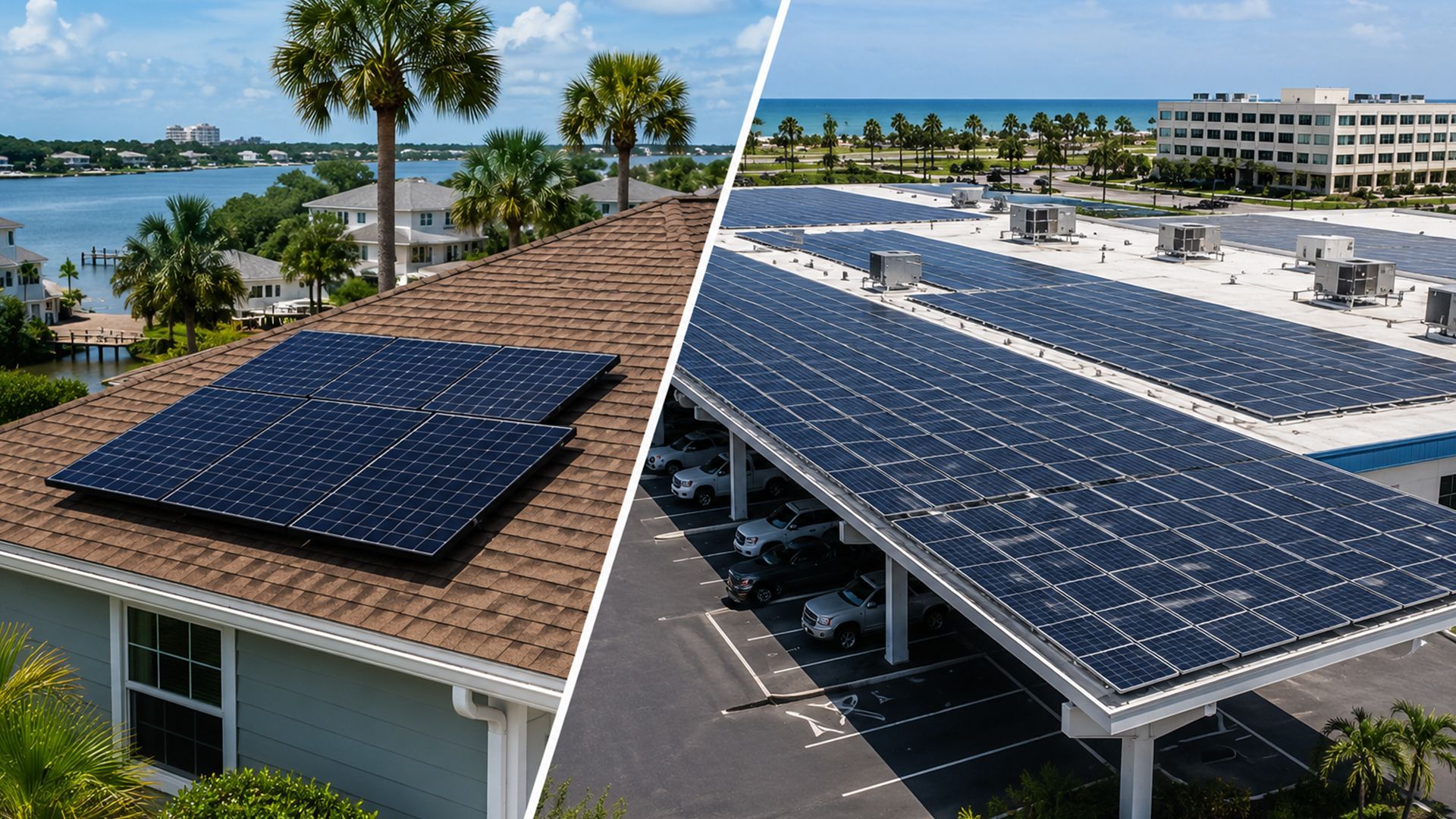
We pair that purified water with soft brushing rather than anything abrasive, since manufacturers commonly steer away from hard pads or aggressive scraping on panel surfaces. We also work carefully around mounting hardware and roof edges, whether your panels are on a shingle roof, tile roof, or a flat commercial roof, so the cleaning stays controlled and the surrounding area isn't put at risk in the process.
How Often Should Solar Panels Be Cleaned?
There's no single answer here that applies to every property, since it depends on panel location, nearby tree cover, and how exposed the array is to wind-driven dust or salt. Many property owners plan cleanings around the times buildup tends to peak, heavy pollen season and after storm season, rather than sticking to a fixed calendar date.
If your property is closer to the coast or sits under more tree canopy than most, buildup is likely to show up faster than it would on a more open, inland property. We can take a look at your specific setup and recommend a schedule that actually fits your situation instead of a generic interval that may not apply.
Frequently Asked Questions
Is it normal for panels to look hazy even if they're still producing power?
Yes, that's actually common. A thin layer of buildup can affect performance gradually, in a way that's not always obvious from your energy bill right away, which is part of why panels can look hazy well before anyone notices a real drop in output.
Can I just hose off my panels myself?
You can, but a regular hose won't remove bonded pollen film or salt residue the way a purified water system will, and tap water can leave mineral spots behind once it dries. If you want a thorough clean without that risk, that's exactly what our solar panel cleaning service is built for.
Will cleaning my panels damage them?
Not when it's done with the right method. We use soft brushing and purified water rather than anything abrasive, which keeps the process in line with what most manufacturers recommend for panel maintenance.
Do you clean panels on flat commercial roofs differently than residential roof-mounted systems?
The core method stays the same, but how we approach the array depends on the setup. Flat roofs, carports, and ground-mounted racks each have their own access considerations, while residential roof-mounted panels need extra care around mounting hardware and shingles or tile.
How do I know if my panels in St. Johns County need cleaning?
A visible haze, streaking, or a noticeable dulling of the glass compared to when the system was installed is usually the clearest sign. If you're not sure, reach out and we can take a look and let you know honestly whether cleaning would make a real difference for your system.
Let's Take a Look at Your Solar Panels
If your panels in St. Johns County are looking duller than they used to, give us a call at
904-792-7777 and we'll come take a look and tell you honestly what's going on. You can also
reach out to us and share the panel location and approximate count so we can put together an estimate. Either way, we'll get back to you to find a time that works.